To better understand cleaning solutions with and without ENZYMEs, we should first understand some issues about ENZYMEs related to cleaning and cleaning. ENZYMEs are biological catalysts that are proteins in nature, and play a role in accelerating the rate of chemical reactions. During the cleaning process, enzymes have the effect of accelerating the decomposition process (hydrolysis), breaking down the structure of macromolecules into smaller units, making these substances more easily soluble in water. Therefore, to increase efficiency, current cleaning solutions can add enzymes to the solution composition.
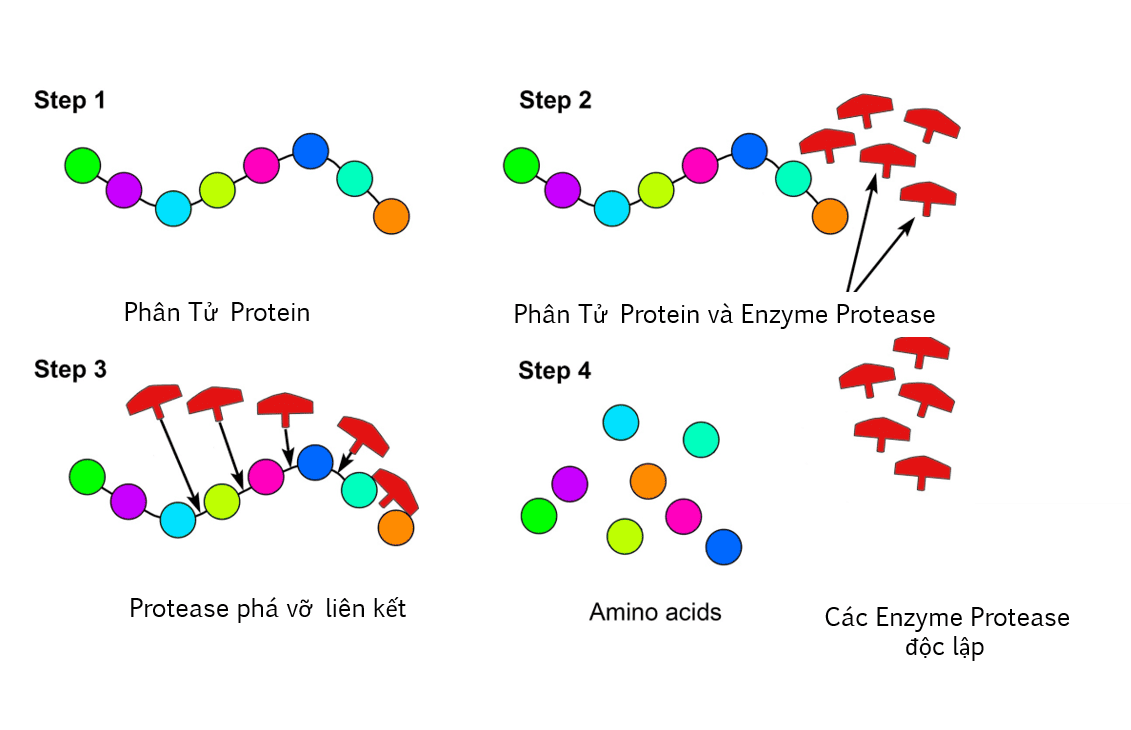
Figure 1: Enzymes help speed up the breakdown of Protein into Amino acids.
Each enzyme only affects one or a certain group of substrates. Amylase enzyme helps to decompose starch, Protease decomposes Protein, Lipase decomposes Lipid. For medical instrument cleaning solutions, Protease plays the most important role because most of the substances that need to be cleaned are proteins in body fluids including blood, tissue, mucus.
Enzymes play a very important and effective role inside the body, however, when outside the body, the effect of enzymes can be significantly reduced. For example, Lipase works very well inside the body, however, in solution, Lipase is quite ineffective, because Lipase needs to coordinate with bile inside the body to achieve maximum efficiency, outside the body, to decompose Lipid, Lipase needs to dissolve with Lipid, so in cleaning or detergents, Lipase is quite ineffective.
When using cleaning solutions containing enzymes, it is necessary to pay attention to the dilution state of the solution. In concentrated solutions, enzyme stabilizers are usually present. When diluted, enzymes become less stable and denature over time and can become breeding grounds for bacteria.
Enzymes are highly sensitive to temperature, pH and other environmental changes, so when environmental conditions change or when exposed to very dirty instruments that change environmental conditions, enzymes can denature, become inactive or coagulate.
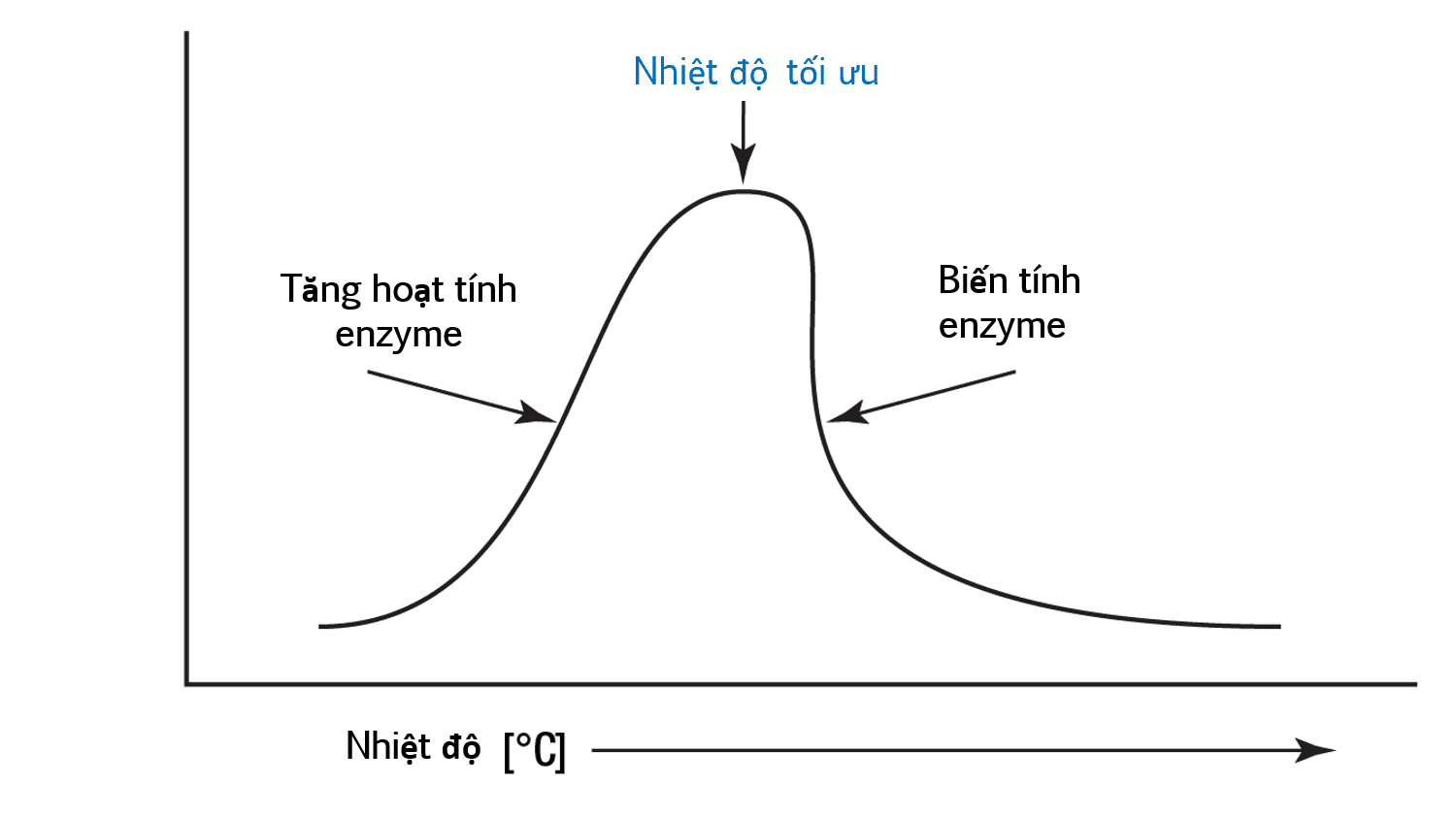
Figure 2: Changes in enzyme activity with temperature
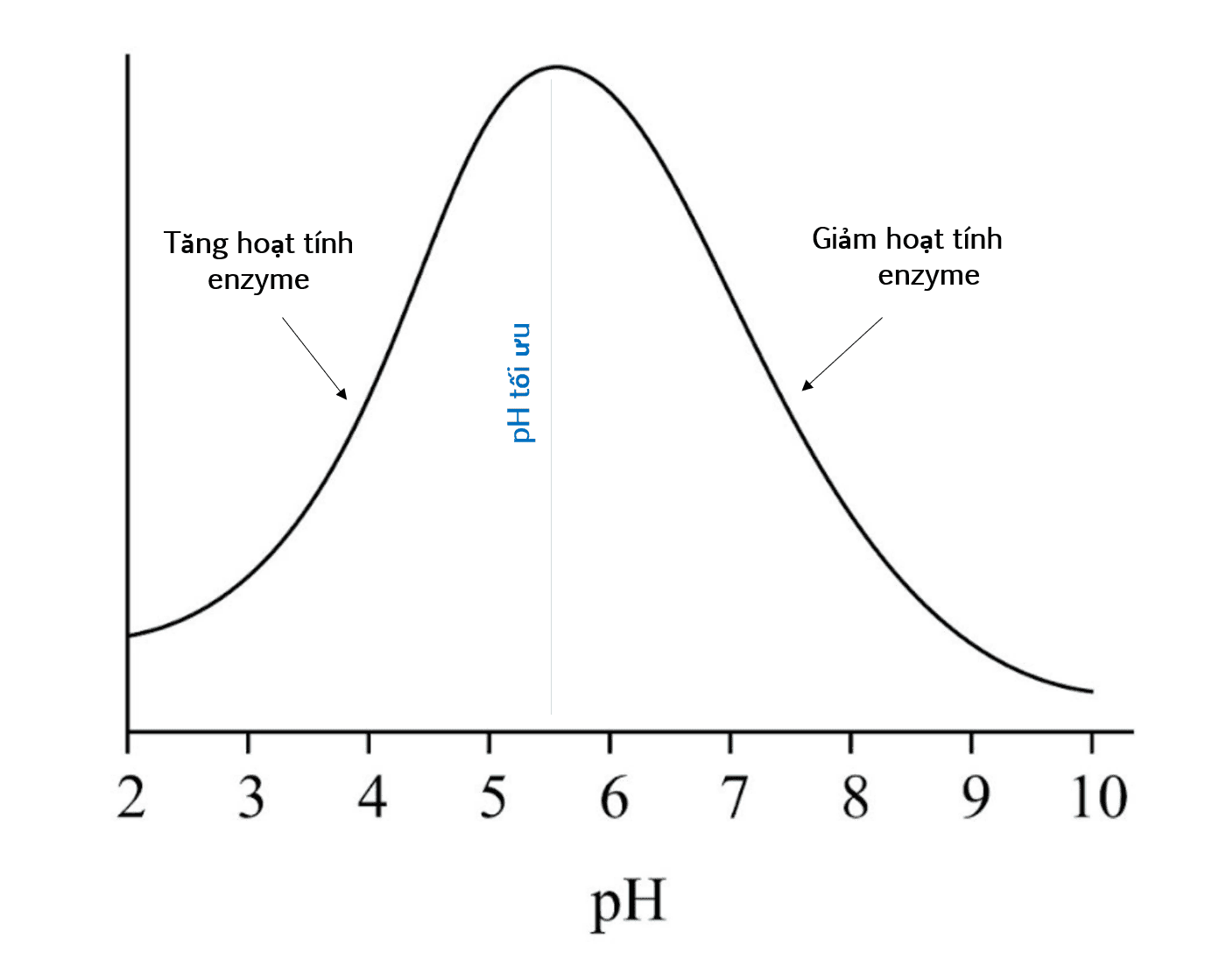
Figure 3: Changes in enzyme activity according to pH
Most of the current cleaning solutions are mainly based on Ammonium combined with enzymes to improve the effectiveness of the solution, however, adding enzymes will cause some limitations as mentioned above. Understanding these limitations, Huckert - a leading manufacturer of cleaning and disinfecting chemicals in Belgium has researched and launched a generation of cleaning and pre-disinfecting solutions that do not contain enzymes but still ensure the cleaning ability while overcoming the limitations of enzymes.
With the main ingredient being quaternary Ammonium combined with 02 alcohol radicals designed in a special balanced ratio that is carefully controlled, creating a synergistic effect that significantly increases the cleaning and disinfecting ability compared to each individual ingredient.
The synergistic effect is a very common effect in chemistry, when chemicals interact with each other, leading to an overall effect that is much greater than the sum of their individual effects. With this special combination, Huckert has created a surface active solution that is safe for users, safe for equipment, fast-acting, and stable in most environmental conditions (temperature, pH, hard water).
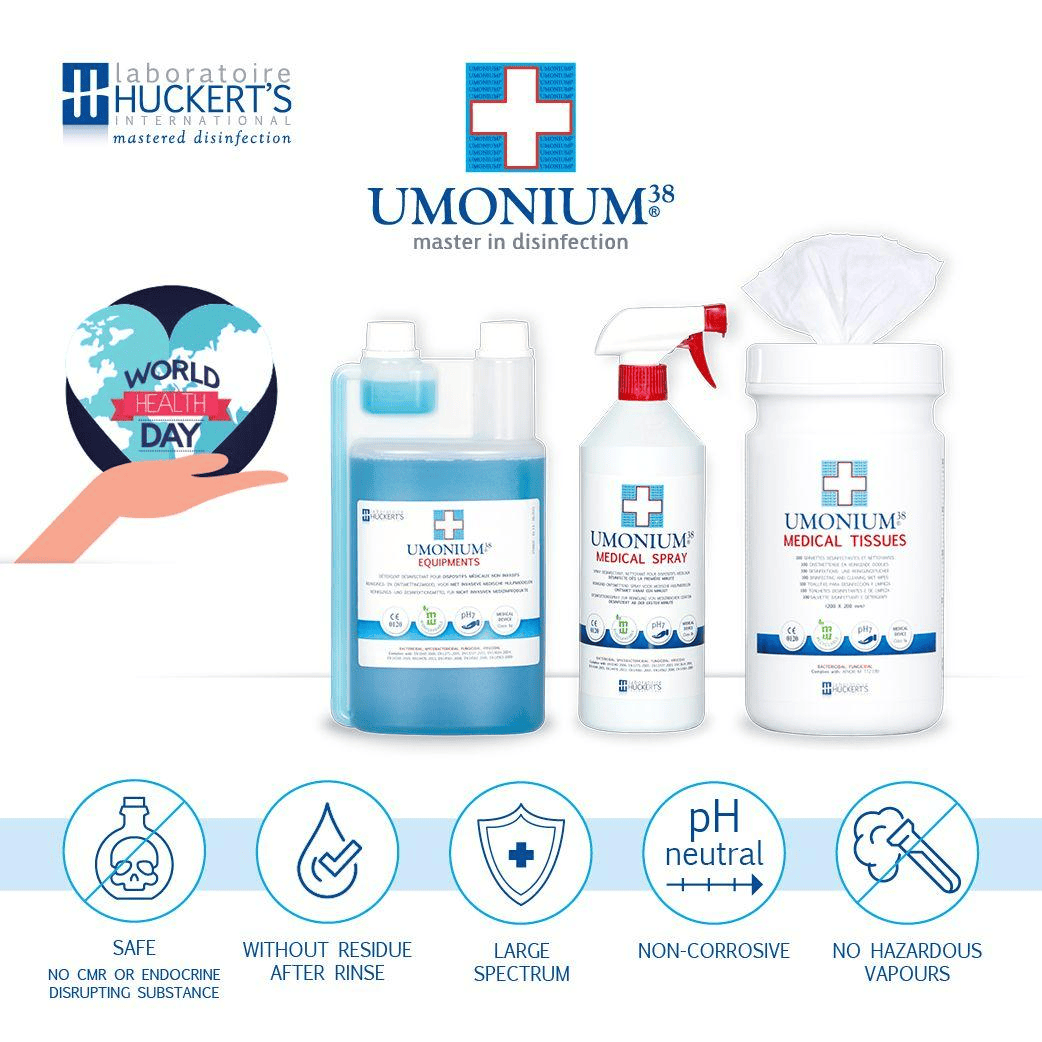
Figure 4: Umonium38 product - Huckert